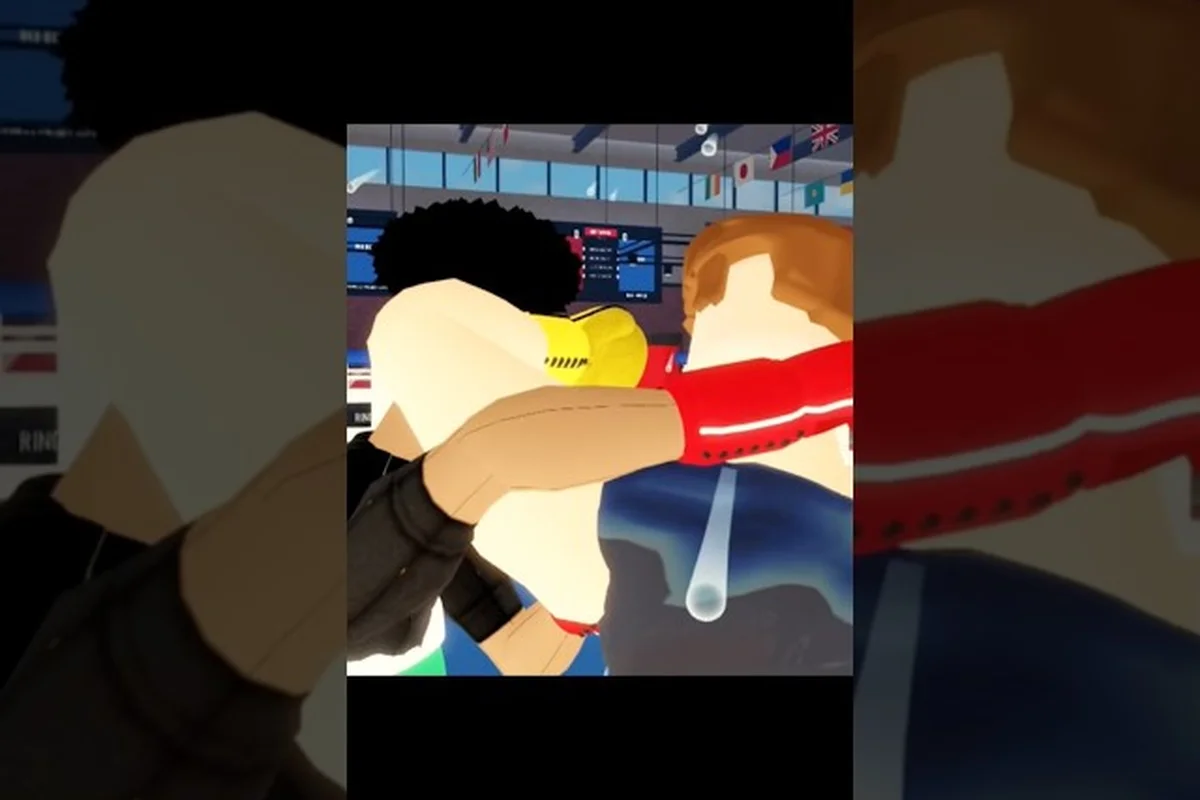
The boxing southpaw stance flips the orthodox template: right hand leads, left hand sits on the rear, and the lead foot moves to the right. That mirror image changes every angle, every punch line, and every counter window in First Person Boxing, where the official description confirms five named mechanics — punches, slips, the two guard variants, counters, and a stamina pool that slows you down when it runs dry. Learning the stance is the difference between walking into a southpaw fight blind and owning the angles from the first bell. This guide breaks down positioning, the orthodox matchup, the core punch toolkit, and the slip discipline that holds the stance together under pressure.
Southpaw Stance Fundamentals in First Person Boxing
The southpaw stance is defined by handedness, not by some hidden stance-name system the game invented. The official description names those mechanics at the type level but does not name stance presets, so the stance itself is something you build with movement inputs, camera angle, and the way you queue your punches. The right hand becomes the lead jab, the left hand becomes the power cross, and the lead foot sits on the right side of your center line. A solid grasp of boxing basics helps because the terminology here is universal boxing terminology, not a custom move list.
Positioning Your Hands and Feet
A textbook southpaw keeps the lead right shoulder slightly forward, the rear left shoulder protecting the chin, and the lead right elbow tucked so the jab can extend without telegraphing. Your feet should be staggered — lead right foot forward, rear left foot back at roughly shoulder width, weight balanced 60/40 toward the rear so a slipping motion doesn't tip you over. The first-person camera angles naturally align your right glove with the center of the screen when your rear left foot loads, which is why many players find the stance feels more intuitive than the orthodox mirror once they switch.
Camera and Stance Interaction
Because the game renders from a first-person perspective, the camera sits roughly where your head sits. A southpaw angles the camera slightly to the right of the opponent's centerline, so the lead right hand appears closer to the screen edge and the rear left cross drives straight down the pipe. This is one of the few cases in boxing where the visual field actually helps the striker — your right glove already covers the jab lane in your peripheral vision, freeing your focus to read the opponent's rear hand.
Why the Stance Matters in This Game
The game's age is young — launched 28 September 2026, with the most recent update on 16 October 2026 — and the combat system is still being patched. That means stance fundamentals matter more than memorized combos, because patches shift timing windows and guard responsiveness faster than a player can learn specific button sequences. Owning the southpaw angles from muscle memory protects you from breaking down every time the developer tunes a number. According to community testing reported on player threads, fighters who commit to a stance and drill the slip rhythm adapt to patches faster than players who swap stances every round.
| Element | Southpaw Setup | Orthodox Setup |
|---|---|---|
| Lead hand | Right jab | Left jab |
| Rear power hand | Left cross | Right cross |
| Lead foot side | Right side of center | Left side of center |
| Lead shoulder | Right forward | Left forward |
| Natural angle vs opponent | Off-center to your right | Off-center to your left |
The Orthodox vs Southpaw Matchup
The matchup most players will fight is southpaw versus orthodox — a lefty facing a righty. The angles are not symmetric: the orthodox fighter's rear right hand and the southpaw's lead right hand travel the same lane, which creates a natural collision point that rewards whoever controls the jab. Community reports from PvP sessions describe this lane as the "phone booth," because both fighters' lead hands are extending into the same six-inch corridor and the first clean read usually decides the exchange.
Lead Hand Collision in the Phone Booth
When a southpaw's right jab and an orthodox's left jab extend at the same time, the hands meet at the midpoint. The fighter who times the slip — pulling the head offline while the jab retracts — wins the lane, and that winner usually gets a free rear hand because the opponent is still recovering from a missed jab. Players who practice the first person boxing how to slip punches sequence early tend to dominate this lane because the slip doubles as a setup for the rear cross.
Angles and Footwork
The southpaw's natural angle is to step to the outside of the orthodox's lead foot — your left, their right. Stepping outside breaks the phone booth geometry and opens a clean lane for the rear left cross to the opponent's exposed right side of the head. The orthodox player, by contrast, wants to angle inward toward the southpaw's lead foot to cut off the same lane. Both fighters are essentially fighting for the same pocket, just from opposite directions. Because the game caps servers at 16 players and supports PvP plus AI practice, you can drill the footwork angle in single-player before testing it live, which is the safer progression.
Why Most Players Default Orthodox
Player counts at capture (2026-10-16) show roughly 2.3K concurrent players, and the developer behind the Can You Box? group has not published stance-distribution stats. However, community observation across PvP lobbies consistently reports the orthodox stance as the majority pick, which means southpaw players will face orthodox opponents far more often than the reverse. That imbalance is a feature, not a bug, for a southpaw player — every orthodox opponent is a familiar matchup, and every rare southpaw-versus-southpaw fight becomes a surprise weapon for whoever has drilled the mirror match.
| Matchup | Lane of Conflict | Southpaw Goal | Orthodox Goal |
|---|---|---|---|
| Southpaw vs Orthodox | Center (lead hands collide) | Step outside, land rear left | Step inside, land rear right |
| Southpaw vs Southpaw | Outer lanes (no collision) | Control the angle first | Control the angle first |
| Orthodox vs Orthodox | Center (lead hands collide) | Land the cleaner jab | Land the cleaner jab |
Building the Southpaw Punch Toolkit
The game does not publish a move list, damage numbers, or stamina cost per punch — the official description only confirms that punches exist as a mechanic. That means the toolkit below is built from universal boxing technique applied to the five confirmed mechanics: punches, slips, head guard, body guard, counters, and a stamina pool that drains with activity. Your job is to chain these in patterns that fit a right-hand-lead stance.
The Jab as the Setup Punch
The lead right jab is the southpaw's rangefinder and the punch that sets up everything else. Throw it with a small step forward, retract quickly, and circle off the centerline immediately after. A jab that extends and stays extended is a jab that gets countered — the official counter mechanic can produce a clean knockdown, so overcommitting to the lead hand is one of the fastest ways to feed the opponent a highlight-reel finish. Players learning boxing how to jab often overcommit on extension, which is the exact mistake the counter mechanic punishes.
The Left Cross as the Power Punch
The rear left cross is the southpaw's knockout punch. It travels from the rear hip, rotates through the core, and lands with the full weight of the stance behind it. Against an orthodox opponent, the rear left cross targets the right side of their head — the side their lead hand cannot easily parry without crossing the body. The cross costs more stamina than the jab because of the rotation, and the official stamina pool slows the striker down when it runs dry, so the cross should be reserved for clean reads rather than thrown on every exchange.
The Hook as the Angle-Changer
The hook is the punch that punishes an opponent who steps the wrong way. The lead right hook targets the opponent's left side when they circle into your power, and the rear left hook is a short, chopping punch that catches them stepping out of range. Because the game's first-person camera makes lateral hooks feel more like lateral extensions than sweeping arcs, the hook in this game rewards fighters who rotate the torso and commit the back foot to the pivot. Players working on boxing how to hook should drill the pivot before worrying about hand speed, because a flat-footed hook is a slow hook.
The Uppercut as the Counter Punch
The uppercut is the southpaw's best friend when an opponent shells up against the jab and the cross. The lead right uppercut sneaks under their guard when they lean forward to smother the jab, and the rear left uppercut punishes an opponent who drops their head after missing a big swing. The official counter mechanic produces knockouts, and the uppercut is the cleanest counter to an opponent who overextends. Working through boxing how to uppercut is the way to convert a defensive read into a finish, because the uppercut does not require the full rotation of a cross — it only needs the legs to drive upward.
Slips as the Defensive Foundation
The slip is the mechanic that ties everything together. A southpaw slipping offline to the left avoids the orthodox rear right hand and simultaneously opens the lane for the rear left cross. The game's confirmed slip mechanic is the trigger for the counter mechanic, which means a clean slip into a counter is one of the highest-value sequences in the entire game. Boxing how to slip a punch is the single most important defensive skill for any stance, and the southpaw stance amplifies the slip's value because the angle of the slip lines up with the rear power hand.
| Punch | Lead/Rear | Stamina Cost | Best Target | Counter Risk |
|---|---|---|---|---|
| Jab | Lead right | Low | Opponent's lead hand, chest | Low (retracts fast) |
| Cross | Rear left | High | Opponent's rear side of head | Medium (over-rotation) |
| Hook | Either | Medium | Opponent's head after angle | Medium (slow on flat feet) |
| Uppercut | Either | Medium | Opponent who shells or drops | High (close range) |
Drills, Counters, and Stamina Management
The five confirmed mechanics interact in ways the official description only describes at the type level. Specific numbers, costs, and frame data are not published, so the strategy below is built around type-level behavior rather than memorized numbers. As of the 16 October 2026 update, the stamina system is still being tuned, which means the specific "empty pool" threshold can shift between patches.
The Jab-Slip-Cross Triangle
The most reliable southpaw sequence is jab, slip, cross. Throw the lead right jab to draw the opponent's lead hand, slip offline to your left as their rear hand loads, and fire the rear left cross into the open lane. This triangle works because the slip is a confirmed counter trigger, and the counter mechanic produces knockouts, so the second half of the sequence is where the fight ends. The stamina cost is moderate because the jab and cross are both committed, but the slip itself does not drain the pool, which means the sequence is efficient at any stamina level.
Head Guard vs Body Guard Reads
The official description splits guard into head guard and body guard, which means an opponent can choose to protect their head or their body, but not both at the same time at full efficiency. A southpaw who notices an opponent's head guard up should target the body with the lead right jab, then attack the head when the opponent drops their hands to cover the ribs. Conversely, a southpaw facing a body-low guard should target the head with the rear left cross, because the opponent's head is exposed while they protect the body. The split-guard system is one of the most exploitable features in the current patch, and players who read the guard switch win exchanges at a high rate.
Stamina Pool Discipline
The stamina pool slows the striker down when it empties, which means the southpaw who empties the pool early loses the ability to slip, guard, and throw meaningful combinations. Discipline means reserving the rear left cross for clean reads, keeping the jab at low extension, and using the slip as a stamina-free defensive tool. The slip is the only confirmed mechanic that does not drain the pool, so high-volume southpaws should structure their rounds around slip-heavy defense rather than punch-heavy offense.
Cinematic Knockdowns and Replay Review
The official description also names cinematic knockdowns and replays, which means counter knockouts are designed to be visually distinctive. Treat every knockdown as a replay review — note which punch landed, which slip created the opening, and which guard the opponent had up. The replay system is one of the fastest learning tools in the game, and southpaw players who review their knockouts tend to identify patterns in their offense faster than players who only review their losses. Because the game supports practice mode against AI, you can replay the same counter sequence against the AI and drill the timing without spending stamina in a live PvP round.
| Round Phase | Primary Tool | Stamina Goal | Risk |
|---|---|---|---|
| Open (100-70%) | Jab-heavy range-finding | Stay above 70% | Low counter exposure |
| Mid (70-40%) | Jab-slip-cross triangles | Spend on confirmed reads | Medium counter risk |
| Late (40-10%) | Counter-focused defense | Conserve for counter finish | High if forced to lead |
| Survival (<10%) | Slip and guard only | Pool regenerates with reduced activity | Stamina-slowed movement |
Frequently Asked Questions
What makes the boxing southpaw stance different from the orthodox stance in First Person Boxing?
The southpaw stance leads with the right hand and right foot, while the orthodox stance leads with the left hand and left foot. That mirrored positioning changes every angle and every jab lane, which is why the orthodox vs southpaw matchup produces the lead-hand collision that experienced players call the phone booth. The game does not name stance presets, so the stance is built through movement inputs and camera angle.
Is the southpaw stance harder to learn than the orthodox stance in this game?
Most players find the orthodox stance more natural because the lead left hand matches the dominant-hand expectation for right-handed players. The southpaw stance inverts that, which means the lead right jab feels awkward at first. Community testing reports that after roughly ten practice rounds against the AI, most players settle into the southpaw rhythm and report cleaner rear left crosses because the rear hand is now the dominant hand rotating through the stance.
Should a beginner use the southpaw stance in First Person Boxing?
Beginners are usually better served by learning the orthodox stance first because the majority of opponents will be orthodox, and the orthodox toolkit is the easier one to drill against orthodox opponents. The southpaw stance becomes a strong second stance once the orthodox fundamentals are solid, because it doubles the angle options and gives the fighter a way to disrupt orthodox-only opponents. The game's AI practice mode supports both stances, so the learning curve can be absorbed in single-player before risking it in PvP.
How does the stamina pool affect southpaw strategy?
The stamina pool slows the striker down when it empties, which means southpaw players who spend too much on rear left crosses early will find themselves unable to slip or guard in the late round. Discipline means reserving the rear power hand for confirmed reads and using the slip — which does not drain the pool — as the primary defensive tool. The stamina system is still being tuned in patches, so the exact threshold shifts, but the discipline of slip-heavy defense holds across every patch.
What is the highest-value counter for a southpaw fighter?
The jab-slip-cross sequence is the highest-value counter because the slip is a confirmed counter trigger and the rear left cross lands on the open lane the slip creates. The official counter mechanic produces knockouts, so a clean slip into a rear cross is one of the fastest finishes in the game. Players who learn to read the orthodox rear right hand and slip to the left will find the cross sitting on a plate more often than not.